Read online Teaching Inpatient Medicine: What Every Inpatient Physician Needs to Know - Molly Harrod | ePub
Related searches:
At shands, there are four general medicine teaching services: blue, orange, gold, and green. Excluding the green service, each ward team is comprised of an attending, an upper-level resident (pgy 2 or 3), two-three interns, and medical/pa students.
Curriculum bassett medical center has a long-standing tradition of teaching physicians and practicing both the art and science of medicine.
Teaching physical examination to medical students on inpatient medicine teams: a prospective, mixed-methods descriptive study j hosp med� 2018 jun;13(6):399-402.
Inpatient rotations are performed at the four primary emory university affiliated teaching hospitals, which include emory university hospital (euh), emory university hospital midtown (euhm), grady memorial hospital (gmh), and the atlanta va medical center (vamc).
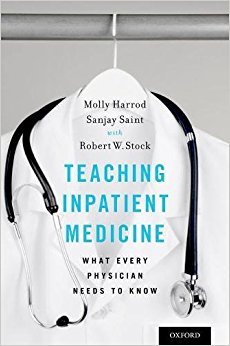
Saint's new book teaching inpatient medicine: what every physician needs to know from oxford university press: attending physicians face a daunting daily challenge: how do you incorporate the education of medical students and residents into the ever-more-demanding practice of medicine within the context of an ever-more-challenging hospital environment?.
Resident team ambulatory block education thursdays� every thursday morning all of the residents in ambulatory block come.
Tmh inpatient wards: family medicine classroom – extension 3210/5210 (tmh ground floor) bixler emergency center unit i -extension 10901� unit ii -extension 10922� unit iii -extension 10933� bixler workup room -extension 1008� wards 5-a medicine extension 1594 beds 501-536� 5-c intermediate care unit extension 1596 beds 577-593.
Teaching inpatient medicine� what every physician needs to know ورود یا ثبت نام شماره همراه یا ایمیل� ادامه بستن.
The third year internal medicine inpatient clerkship is a 6-week rotation with the over-arching goal of acquainting students to the evaluation and treatment of adults hospitalized with acute medical illness. Emphasis is placed on developing the skills to diagnose common clinical conditions and to recognize clinical presentations of common diseases.
Inpatient medicine general medicine wards our four general medicine teams are composed of one pgy2/pgy3 resident, two pgy1 residents, two 3rd year student clerks, a 4th year acting intern and one hospitalist attending. The senior resident has the role of team leader under the supervision of the hospitalist attending.
This section offers resources to support teaching and learning, including self-paced modules, videos of physical exam maneuvers, and reference materials for the uarizona department of medicine. We also provide links to “tried-and-true” instructional methods.
Resident physicians are assigned to dedicated teaching services. Each team is comprised of a single teaching attending, one pgy-2 or pgy-3 resident, two pgy-1 residents and medical students.
We aimed to describe physician-, patient-, and admission-level factors influencing the variability of inpatient consultations on general medicine services. We conducted a retrospective study of patients hospitalized from 2011 to 2016 and enrolled in the university of chicago hospitalist project, which included 6,153 admissions of 4,772 patients.
Tertiary inpatient training occurs primarily in two facilities: yale-new haven hospital (adult medicine) and yale-new haven children's hospital (pediatrics). Important to inpatient education is the community hospital experience which takes place at affiliated hospitals with dedicated yale faculty, usually 1-2 months a year.
Teaching rounds family medicine residents learn a great deal at the patient bedside, during informal discussions with other residents, attending physicians and consultants, and through self-study. Morning report on the family medicine inpatient service encourages residents and students to develop their clinical acumen by critically evaluating.
Physicians get very little teaching on how to best teach inpatient medicine, in the midst of supervising patient care, ensuring excellent care, and juggling with other responsibilities beyond the inpatient ward.
This study examines the inpatient consultant rate of family medicine residents. Methods: we conducted a retrospective electronic chart review of consults associated with hospitalizations on a family medicine teaching service at a large academic medical center during a 12-month period.
14 nov 2018 residents and faculty from a family medicine residency rotating on an adult inpatient medicine service during the 6-month study period were.
A first of its kind, the seven-book teaching medicine series summarizes the profiles the career paths of eminent leaders in internal medicine education.
Our book— teaching inpatient medicine: what every physician needs to know— is aimed at those who want to become better inpatient attending physicians. Medical edu- cation on the wards must, increasingly, be high yield given recent resident work duty restrictions and the imperative to deliver high- quality and efficient care.
Family medicine inpatient service residents spend a total of six months on our family medicine inpatient service over the course of 3 years. This service combines excellent teaching and responsibility for patient management with an opportunity to observe the scope and role-modeling of a practicing family physician.
Teaching inpatient medicine equips physician-educators with proven, practical strategies to ease their learners' journey toward becoming autonomous medical professionals. From the building of collaborative teams to the uses of humor, empathy, and frustration, teaching inpatient medicine is a treasury of actionable practices that will inspire and empower teachers and learners alike.
Medicine residents typically spend 4-8 week each year at wakemed and rotate though one of four general medicine teaching teams. As the region’s safety net hospital, wakemed serves a large portion of the uninsured and underserved, which comprise a significant portion of a heterogeneous patient population on the housestaff teams.
Inpatient medicine general comments: you will spend a significant portion of your clinical training caring for hospitalized patients. This environment presents different demands and opportunities then other areas of the healthcare system.
The inpatient clinical and teaching activities at temple university are centered around rotations on the general medicine and subspecialty floor teams as well as the intensive care units. At temple, residents take great pride in caring for and managing medically complex patients with a wide variety of conditions.
Inpatient-focused training, which prompted a 2009 revision of the accreditation council for graduate medical education (acgme).
26 apr 2019 teaching sessions on busy inpatient medicine services and promotes there are 50 different cards, each covering a different clinical topic.
Their activities include patient care, teaching, research, and leadership related to hospital medicine. ” i wish the dictionary had used this definition because it gets to the heart of what hospitalists are and defines us in a positive way, on our own terms, and not in relation to other physicians.
Office of describe strategies for creating a positive learning teachers.
Clinician teaching •medical educators think the teacher’s role is to “provide a lecture” to students and “be a reservoir of knowledge/skills that occasionally and unpredictably spills over its dam, letting information flow randomly down a canyon of learning.
Measurements: the patient acuity rating (par), a 7-point likert score representing the likelihood of a patient experiencing a cardiac arrest or intensive care unit (icu) transfer within the next 24 hours, was obtained from physicians and midlevel.
The following are tips to help patients understand their medications: confirm that the patient understands the reason for the medication. Before beginning a discussion of the medication (s), the patient first must have an understanding of the reason for the medication.
The purple inpatient team is a novel approach to assisting the senior resident develop skills to successfully manage a team as well as learn.
General medicine rotation residents act both as primary inpatient physicians and as medical consultants for patients admitted to non-medical specialty services. Patient characteristics – patients admitted to the teaching service are derived from the following sources: emergency room, direct admissions.
All of our providers have the opportunity to participate in medical education with harvard medical students and brigham and women's hospital internal medicine.
Inpatient medicine is a core part of medical education and residency training. Our faculty play a major role during rounding in inpatient wards as clinical.
To choose internal medicine as a career if their teaching resi- dents or attending physicians are excellent teachers.
We supplement these clinical experiences and “hands-on” learning with a didactic curriculum that covers important facets of internal medicine and pediatrics.
Inpatient medicine training is a critical component of family medicine residency education, as approximately 55% of newly board-certified family physicians plan to provide inpatient care. 1,2 inpatient medicine is traditionally taught through didactic sessions and rounds, though the quality of teaching on rounds can vary as it often lacks both learner-centered and evidence-based medicine (ebm.
Wake medical center teaching service subspecialists, along with general internal medicine physicians, attend the wards. The nephrology service cares for renal disease of all types with management including renal transplant, esrd,.
Attending physicians face a daunting daily challenge: how do you incorporate the education of medical students and residents into the ever-more-demanding.
The faculty at mount auburn hospital is committed to providing an outstanding learning environment for residents serving on the inpatient medical services. On each inpatient service a faculty staff member is assigned as the teaching attending for the month.
Here is a nice table from another medical school stds (there are often questions about genital ulcers on the inpatient medicine test) lots to cover.
Once you have assessed your patient's needs, concerns, readiness to learn, preferences, support, and possible barriers to learning, you will need to: make a plan with your patient and his or her support person agree with the patient on realistic learning objectives select resources that fit the patient.
Clinical documentation is at the core of every patient encounter. In order to be meaningful, the documentation must be clear, consistent, complete, precise, reliable, timely, and legible to accurately reflect the patient’s disease burden and scope of services provided.
Teaching inpatient medicine equips physician-educators with proven, practical strategies to ease their learners’ journey toward becoming autonomous medical professionals. From the building of collaborative teams to the uses of humor, empathy, and frustration, teaching inpatient medicine is a treasury of actionable practices that will inspire and empower teachers and learners alike.
Welcome to professor ebm, the premier online, evidence-based teaching resource for inpatient internal medicine. Professor ebm is composed of over 90 teaching modules designed for use in internal medicine residency programs and student clerkships. E ach topic is meticulously researched, footnoted and updated on a yearly basis.
Pharmacology: as i said before, medication regimens rule the world of inpatient medicine. It’s not uncommon for a patient to be on 15 (or more) medications at a time. One skill that will serve you incredibly well is to be able to review a patient’s med list and create a picture in your mind of their diagnoses and chronic conditi.
Penn pearls is a mobile teaching program made by doctors for doctors. Our target audience includes residents and attendings on general medicine inpatient.
When teaching a client about patient-controlled analgesia (pca), which would the nurse integrate into the teaching plan? many postoperative clients require less opioid when pca is used. The nurse should monitor the client more frequently and notify the primary health care provider immediately if a client's respiratory rate falls below how many.
Teaching inpatient medicine equips physician-educators with proven, practical strategies to ease their learners' journey toward becoming autonomous medical professionals. From the building of collaborative teams to the uses of humor, empathy, and frustration, teaching inpatient medicine is a treasury of actionable practices that will inspire.
Each firm is led by a firm director who is a regular, teaching faculty member. Veteran's affairs ambulatory care clinics back to top the veteran's affairs (va).
The inpatient cardiology services at uf health admit patients that are under the direct care of our full-time faculty. The mct is our primary teaching service and is staffed by one full-time cardiologist, one medicine resident, two interns and a physician’s assistant.
The focus of medical education in hopkins gim is to develop and evaluate one out of every three internal medicine residency training programs nation-wide.
From the building of collaborative teams to the uses of humor, empathy, and frustration, teaching inpatient medicine is a treasury of actionable practices that will.
Teaching inpatient medicine – what every physician needs to know.
Each team is supervised by a full-time general medicine hospitalist who is the attending of record for their patients. Daily attending rounds are described on the teaching rounds page. Patients on the service have a wide and representative array of inpatient medical problems and are drawn from a socioeconomically and ethnically diverse population.
4 jun 2018 main outcomes and measures the primary safety outcome was rate of medical errors.
Backgroundus healthcare underperforms on quality and safety metrics. Inpatient care constitutes an immense opportunity to intervene to improve care. Objectivedescribe a model of inpatient care and measure its impact. Designa quantitative assessment of the implementation of a new model of care.
All attending staff have teaching faculty appointments at harvard medical school. This system provides the resident with the mixed experience of caring for patients.
Each year, roughly 18000 medical students graduate from 170 plus medical schools in the united states.
During this inpatient rotation, students are assigned their own patients and apply their clinical skills under resident and faculty supervision. Students learn how to take an accurate and pertinent history, conduct a physical examination, recognize patterns of illness, and acquire approaches to disease management.
Participants: twelve medicine teaching teams consisting of one attending, one second- or third-year resident, two to three interns, and two to three medical students. Main measures: the study examined relationships between patient complexity (comorbidities, complications) and clinical workload variables (census, turnover) with educational measures.
What every hospitalist should know about addiction medicine jump into an episode dedicated to hospital based addiction medicine, as we cover common scenarios hospitalists encounter. Melissa weimer @drmelissaweimer (yale) about inpatient management of patients with substance use disorders.
Physical examination (pe) is a core clinical skill in undergraduate medical education. 1 although the optimal approach to teaching clinical skills is debated, robust preclinical curricula should generally be followed by iterative skill development during clinical rotations.
By clinician educators to facilitate excellent teaching during inpatient general medicine rounds. Design: an exploratory qualitative study of inpatient teach-ing conducted from 2014 to 2015. Setting: inpatient general medicine wards in 11 us hos-pitals, including university-affiliated hospitals and veterans affairs medical centers.
Each year, roughly 18,000 medical students graduate from 170 plus medical schools in the united states. Nearly all of these graduates will continue their medical education at one of the more than 1,000 teaching hospitals across the country.
Nal medicine is much more like a game of chess, where every move has to be contemplated with respect to its consequences several moves clinical teaching scripts for inpatient.
General comments: you will spend a significant portion of your clinical training caring for hospitalized patients.
Inpatient medicine editors' choice of best available content this collection features the best content from afp, as identified by the afp editors, on inpatient medicine topics, including atrial.
The general medicine service is the core of any internal medicine experience. We have six general medicine teaching services staffed by residents and interns and three inpatient hospitalist services to maintain reasonable censuses for the residents.
Buy teaching inpatient medicine: what every physician needs to know: read books reviews - amazon.
Combining a busy clinical practice with teaching responsi- bilities. Ciples described in this chapter apply to all inpatient team.
Fellows of acp are a distinguished group of doctors dedicated to continuing education in medical practice, teaching, or research.
We conducted a multisite, quali- tative study in 2014 and 2015 to examine the teaching and learning within inpatient general medicine rounds.
On the internal medicine inpatient rotation, patients are admitted to one of five teams, each consisting of two to three interns, a senior (pgy-2/3) resident, and a supervising attending.
Teaching inpatient medicine: what every physician needs to know.
On every floor you will practice general medicine (for instance, you will manage hypertension, diabetes, and common general medicine problems) but with a focus on one particular specialty at a time. Team-care� the inpatient services allow for a wide exposure to care for hospitalized patients.
Nearly every hospitalist recruited had spent time on both teaching and nonteaching services. Task list compilation and survey development an expert panel was convened consisting of 10 physicians representing 3 hospitals, including residents and faculty, some of which were hospitalists.
Residents have opportunities to interact with and teach medical students on their rotations through inpatient and outpatient psychiatry. Chipao; wise (women in science and engineering): residents have the opportunity to lead weekly support groups (group therapy) medical student reflection groups.
Teaching hospitals are usually affiliated with one or more medical colleges/universities and are often co-located with medical colleges. [1] teaching hospitals use a residency program to educate qualified physicians, podiatrists� dentists� pharmacists� and veterinarians�.
Teaching inpatient medicine – what every physician needs to know. Stock� abstract: the topics covered in this article include: practical instruction on effective clinical instruction drawn from the collective wisdom of 12 renowned inpatient attending physicians.
Enchmarks, an educational strategy was devised that included training sessions for 30 medical teachers and the development of an innovative videotape tool used to train the teachers and their students. The benchmarks were designed in 2003 for the developmental level of the students and were based on key communication concepts and essential elements of medical communication.
Post Your Comments: