Read online Female Delinquency from Childhood to Young Adulthood: Recent Results from the Pittsburgh Girls Study - Rolf Loeber | ePub
Related searches:
Female Delinquency From Childhood To Young Adulthood - Recent
Female Delinquency from Childhood to Young Adulthood: Recent Results from the Pittsburgh Girls Study
Projects - Dutch Centre for the Study of Female Delinquency
The Relationship Between Child Sexual Abuse And Female
Female Delinquency From Childhood To Young Adulthood: Recent
Female Delinquency From Childhood To Young Adulthood on
Female Juvenile Delinquency: Misunderstoo d by the Juvenile
The Development of Delinquency Juvenile Crime, Juvenile
The Development of Delinquency Juvenile Crime, Juvenile Justice
Understanding the Female Offender - CYC-Net
The Girls Study Group- Charting the Way to Delinquency Prevention
Understanding the Female Offender - ERIC
Female juvenile delinquency: Misunderstood by the juvenile justice
Girls versus Boys in the Juvenile Justice System - National Juvenile
Understanding the female offender
Female Juvenile Delinquency: Misunderstood by the Juvenile
Tackling the Juvenile Delinquency Root Causes of Juvenile
Female Delinquency from Childhood to Young Adulthood von Rolf
Gender differences in juvenile delinquency: The - WUR E-depot
Escalation in the severity of conduct problems and delinquency: The
Investigating Female Delinquency: The Role of Gender
Investigating Female Delinquency: The Role of Gender Construction
A Young Girl's Delinquency Record (Youjo Senki/Saga of Tanya the
Childhood and Delinquency — The Stemley Performance Group
Female Delinquency From Childhood To Young Adulthood eBook
The Relationship Between Juvenile Delinquency and Family Unit
Adolescent neglect, juvenile delinquency and the risk of
Female juvenile delinquency: misunderstood by the juvenile
[PDF] Female Juvenile Delinquency: Misunderstood by the
Female delinquency from childhood to young adulthood : recent
Spotlight on Girls in the Juvenile - Juvenile Delinquency
MALE AND FEMALE DELINQUENCY TRAJECTORIES FROM PRE THROUGH
Male and female delinquency trajectories from pre through
The Role Of Juvenile Delinquency In Prisons - 303 Words
In mid-nineteenth century, groups known as child savers were being formed to assist children in need.
Delinquent daughters explores the gender, class, and racial tensions that fueled campaigns to control female sexuality in late nineteenth- and early.
According to national estimates, every year more than 700,000 adolescent girls are arrested and brought into the juvenile-justice system.
The study of juvenile delinquency has focused primarily on conduct disorder and aggression in males, while relatively little attention has been paid to females who commit delinquent acts. This article offers a critical review of the existing theories of and research on female delinquency and the juvenile justice system's response to female.
Meda chesney-lind is professor of women’s studies at the university of hawaii at manoa. Nationally recognized for her work on women and crime, her books include the female offender: girls, women and crime (3rd edition, 2013), girls, delinquency, and juvenile justice (3rd edition, 2004), female gangs in america (1999), invisible punishment (2002), beyond bad girls: gender, violence and hype.
These factors, along with other factors, are major contributors to female delinquency. Childhood sexual abuse is another factor that can drive a person to commit suicide because the person experiences physical pain. Method sample previous research on female delinquency relied on information obtained from cooperating youths.
10 apr 2017 fields of sociology of deviance, crime and violence and children and youth in portugal, little research has been done into female delinquency,.
Focus on the emotional needs of a child when dealing with juvenile delinquency; understanding female juvenile delinquency; there are many other topics you can think of regarding juvenile delinquency. A look at the main issues surrounding juvenile delinquency will help you come up with an exiting, original and strong research paper topic.
The office of juvenile justice and delinquency prevention indicates that 15% of juvenile arrests occurred for rape in 2006, and 12% were clearance (resolved by an arrest). The total number of juvenile arrests in 2006 for forcible rape was 3,610 with 2% being female and 36% being under the age of 15 years.
Delinquency cases for non-violent crimes on the rise, girls are accounting for a factors such as child abuse or poverty in comparison to their non-offending.
Offense profile of female delinquency cases, 2014 access more information on girls in the juvenile justice system n review faqs about girls’ involvement in juvenile arrests, juvenile court cases, and residential placement nanalyze data with easy access to juvenile court statistics and easy access to the census of juveniles in residential.
Female adolescents entering the juvenile justice system have complex and serious problems in multiple areas of adjustment. Literature is reviewed on the prevalence and form of antisocial behavior in girls and on the long-term implications of such problems in adolescence.
Similarities and differences between male and female delinquency: girls offenses less serious� crimes committed by boys more varied. Half of all girls arrested are arrested for one of two offenses: larceny theft (which for girls is usually shoplifting) running away from home.
Juvenile delinquency definition is - conduct by a juvenile characterized by antisocial behavior that is beyond parental control and therefore subject to legal action.
Delinquent school girls (1975) three mental patients (a bad impersonator, a baseball player, and a gay fashion designer) escape their asylum and sexua.
The study of juvenile delinquency has focused primarily on conduct disorder and aggression in males, while relatively little attention has been paid to females who commit delinquent acts. This article offers a critical review of the existing theories of and research on female delinquency and the juvenile justice system's response to female delinquency.
Juvenile delinquency and why they do it juvenile delinquency is a big thing in the united states of america. The reason for this is that it accounts for a good portion of the percentage of crime, and it can lead to them committing crimes as an adult.
9 mar 2012 while female gang membership was once largely confined to male gangs, in which females were employed in mediocre roles or used as objects.
In september of 2000, the national institute of justice (nij) published research on women and young women in the american justice system. A steady rise in crime among women since the 1980s spurred the research, which found a firm link between abuse and criminal behavior. An alarming 75 to 95 percent of female juvenile delinquents (age 14 to 18) in the justice system are former victims of abuse.
8 feb 2020 females and delinquency delinquency and youth violence have been growing by epidemic proportions.
The shared hypothesis that delinquency—by far and wide— is a male phenomenon is an erroneous conception. Even though males have historically been recognized as violent perpetrators and females as passive and non-threatening victims, the increase in female violence and gang membership has become a cause for concern in several cities across the country.
Childhood sexual abuse often leads girls into behaviors such as running away from home or other status offenses. Effects of abuse last longer for girls fear, anxiety, depression, anger and hostility, and inappropriate sexual behavior, running away from home, difficulties in school, truancy, and early marriage and others are among the long-term effects.
Female delinquency from childhood to young adulthood� recent results from the pittsburgh girls study.
Although traditional delinquency prevention policies were targeted at school-age youth, more modern delinquency prevention and intervention efforts focus on pre-birth into childhood and adolescence. The most recent research suggests that the earliest prevention should begin in the womb and in the first years of a baby’s life.
The new edition of girls, delinquency, and juvenile justice combines cutting-edge research and expanded coverage of girls’ delinquency, including coverage of girls in gangs and the sexual trafficking of girls, to provide students with an accessible, up-to-date, and globally oriented textbook.
Although boys engage in more delinquent and criminal acts than do girls, female delinquency is on the rise. In 1980, boys were four times as likely as girls to be arrested; today they are only twice as likely to be arrested. In this article, elizabeth cauffman explores how the juvenile justice system is and should be responding to the adolescent female offender.
Child sexual abuse has been hypothesized to be an especially significant factor in the etiology of girls' delinquency and women's crime.
5 feb 2018 have you ever wondered why males commit crimes more than females? does it have to do with differences in the ways people of different.
The relationship between juvenile delinquency and family unit structure by definition, an intact home is a two-parent (one male, one female) structure. Death, divorce, separation or desertions) is classified as broken (wilkinson, 1974).
Similarly, we will explore the effects of juvenile delinquency on the delinquent’s family, victim, community and society in general. Students will be provided with a basic understanding of the risk factors associated with juvenile delinquency and challenge them to consider whether early intervention and prevention programs are effective.
Lee female delinquency from childhood to young adulthood recent results from the pittsburgh girls study por rolf loeber disponible en rakuten kobo. This brief fills a gap in criminological literature, as there are few empirically-based studies on delinquency of adoles.
Most of the female delinquents are the girls that have suffered sexual abuse during their adolescence. Physical or sexual abuse can result in unstable psychology and that it might lead to deviant behavior.
Childhood risk factors for persistent delinquency include all of the following, except: poor cognitive development because many victims do not report their experiences to the police, the ucr has been adjusted to address the issue of nonreporting of crime.
Request pdf female delinquency from childhood to young adulthood this brief fills a gap in criminological literature, as there are few empirically-based studies on delinquency of adolescent girls.
Research on female delinquency and the juvenile justice system's response to delinquency and youth violence have been growing by epidemic proportions.
To cover this material, this entry is divided into three sections. This first presents information on why female delinquency must be studied. The second section provides the feminist critique of mainstream criminology and the response of chesney-lind to criticism of the feminist perspective.
22 sep 2019 a young girl's delinquency record (youjo senki/saga of tanya the evil) desperate to end the war and escape the dangers of the front line,.
In the 1990s, a surge of girls' arrests pathway to adult offending.
Why is there growing interest in female juvenile gangs? what are some general trends in female juvenile delinquency, and are these trends of interest to authorities? contact us: +1(805) 568 7317.
To find answers to these questions, the office of juvenile justice and delinquency prevention (ojjdp) convened the girls study group to establish a theoretical.
This research is a cross - sectional study performed on 250 subjects including 200 male juvenile delinquents and 50 female juvenile delinquents aged 9 - 18 years and sentenced in juvenile institution and tribunals responsible with addressing the children’s offenses in tehran.
Poor school attendance is correlated with juvenile delinquency for a few reasons. At the most basic level, poor school attendance is a form of juvenile delinquency: truancy. In many states, such as new york, parents can face penalties like fines and jail time when their children are chronically truant.
25 sep 2010 table 5: parents awareness of their children's friends� influencing male and female juvenile delinquent behaviours in bhutan and whether.
Boys struggle to develop masculinity in female-dominated homes and schools. Females contribute to male delinquency by making it difficult to learn the male role. It is easy for girls to take on the female role; they experience no strain. Sees female delinquency primarily as sexual delinquency� sutherland.
The current study examines the effects of three forms of childhood victimization on self- reported delinquency and aggression in adolescent girls.
The female delinquency rate is still much lower than the male rate but is growing at a faster pace.
Delinquency in girls, as well as boys, is often preceded by some form of childhood victimization (maxfield and widom, 1996; smith and thornberry, 1995; widom, 1989). Some have speculated that one of the first steps in female delinquency is status offending (truancy, running away from home, being incorrigible), frequently in response to abusive situations in the home (chesney-lind and shelden, 1998).
Female delinquents become sexually active at an earlier age than females who are not delinquent (greene, peters and associates, 1998). Sexual activity at an early age sets girls up for a host of problems, including disease and teenage pregnancy, that have far-reaching impacts on their lives and health.
There are many factors that put females at the risk of becoming a delinquent. Some of the major ones include: sexual and/or physical abuse, substance abuse, teen pregnancy/teen parenting, poor academic performance, mental health needs, gang membership, and lastly, early onset of puberty.
Female delinquency was considered unimportant by early delinquency experts because girls rarely committed crime, and when they did it was sexual in nature. Interest in female delinquency has risen because the female crime rate has been increasing, while the male rate is in decline.
1 feb 2019 a woman whose three-year-old daughter was subjected to female genital mutilation (fgm) has become the first person in the uk to be convicted.
-based on idea that child's social development may be key to understanding delinquency behavior. ~investigators continue to support ideal that female delinquents have more dysfunctional home lives than male offenders. ~significant amount of female delinquency can be traced to abuse in the home a specific focus is on the effect of abuse on behavior.
This brief fills a gap in criminological literature, as there are few empirically- based studies on delinquency of adolescent girls.
One review of the literature suggests that 25 to 50 percent of antisocial girls commit crimes as adults (pajer, 1998).
Overall juvenile arrest trends juvenile arrests generally decreased between 1996 and 2005, but the decrease was greater for boys than for girls the exception to the general trend was arrests for simple assaults, which increased for girls while decreasing for boys percent change in male and female juvenile arrests for violent crimes, 1996–2005.
While females make up a little less than ten percent of the overall gang population, research suggests that girls may account for between one-fourth and one-half of the gang members in younger adolescent gangs. 1 overall, female gang members appear to be more heavily represented in gangs located outside of large cities, with half of gangs located in these areas reporting female members.
According to haynie (2003) female delinquency and the female juvenile’s pubertal development could be linked to delinquency in two ways: “first, the visible physical changes in appearance that result from puberty may signal to others that one is ready to take on more adult like roles.
Female delinquency-discrimination what are the differences in delinquency between males and females? in what ways have girls been discriminated against in the juvenile justice system? discuss the consequences of this differential treatment. Provide an example(s) as to why you believe females may be discriminated against in the criminal justice system.
There has been seen to be an alarming rise in female juvenile delinquency in recent years than in the past. This rise has been caused by a number of factors that have led to the rise.
This rapid influx of girls into juvenile justice facilities has drawn attention to the issue of female delinquency and highlighted the need for female-specific research.
The study of juvenile delinquency has focused primarily on conduct disorder and aggression in males, while relatively little attention has been paid to females.
Juvenile delinquency is the participation by a minor child, usually between the ages of 10 and 17, in illegal behavior or activities. Juvenile delinquency is also used to refer to children who exhibit a persistent behavior of mischievousness or disobedience, so as to be considered out of parental control, becoming subject to legal action by the court system.
Because female arrests increased more sharply and then fell more gradually, the share of female juvenile arrests grew from 20 to 29% in those years.
Delinquency, criminal behaviour, especially that carried out by a juvenile. Depending on the nation of origin, a juvenile becomes an adult anywhere between the ages of 15 to 18, although the age is sometimes lowered for murder and other serious crimes.
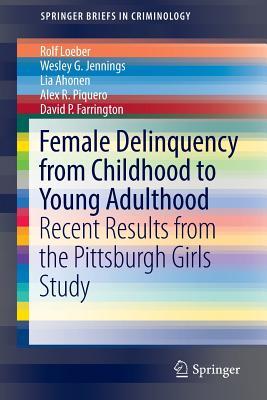
This brief fills a gap in criminological literature, as there are few empirically-based studies on delinquency of adolescent girls. It provides results of a longitudinal study, the pittsburgh girls study (pgs), which includes 2,451 girls, followed annually from age 10-19, the ages when criminal behavior tends to emerge.
Childhood and sexual and violent offending in juvenile delinquents. The study found that compared to males, female juvenile delinquents are more frequently.
He attributed the involvement of women in crime to biological abnormalities and traits present at birth which predetermined them to become criminals. Lombroso felt that women developed differently within sexual and racial limitations (gora, 1982).
Caseworkers on rehabilitation programming for female juvenile delinquents, taking into account the age differences among the incarcerated youth population�.
Juvenile delinquency, theories ofthe topic of juvenile delinquency is a fertile area for construction of sociological theory. Three major sociological traditions, including structural functionalism, symbolic interactionism, and conflict theory, contribute to the explanation of delinquency.
However, social scientists are cognizant, based on statistical evidence, that this is not the case. In fact, females’ involvement in delinquency and other forms of crime bespeaks a far greater problem than what has been purported. According to the office of juvenile justice and delinquency prevention, “between 1985 and 2008, the number of delinquency cases involving females increased 102% (from 222,800 to 449,700 cases); for males, the increase was 29% (from 932,300 to 1,203,600 cases).
This volume examines female juvenile delinquency in terms of the relevance of classical theories of delinquency; the nature, extent, and trends in female delinquency; female delinquency in the context of social roles, gender socialization, and females’ life experiences; and issues delinquent females experience within the justice system.
Post Your Comments: